

 I wrote about an afternoon spent with ChatGPT on July 10 where I said that I actually regard getting AI to write content and then claiming it as one’s own as some weird sort of plagiarism. Getting it to paraphrase a body of work, or rewrite content without proper attribution, is still plagiarism. Alessandra Giugliano
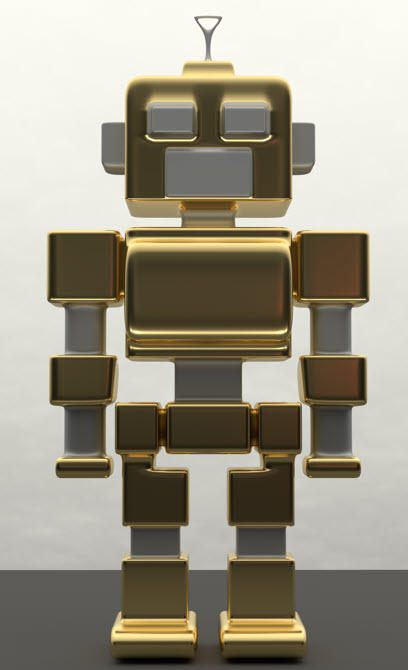
I use an artificial intelligence agent to help with research and coding, but all content that I publish has been checked against sources and fact-checked. While I may ask Rob, my Robot Offsider, to put something into draft form, it’s always up to me to check and rewrite it.
Years ago, I wrote newsletter articles for a Sydney, NSW law firm. They would send me content written in legalese, and I would rewrite it in plain English so their clients could understand it. But along with the materials sent, they would send me links to the source of the references. I would write the content after checking the sources and send it all back to them. They would run it past their editorial committee and then publish it.
It would be their content because they had written the original, then checked, reviewed, and edited it again.
So the short answer, if you’re looking for one, is that AI-generated content is probably in the public domain because copyright laws require a human author. Purely AI-generated content falls into the public domain and cannot be copyrighted in most jurisdictions.
So, because copyright requires human authorship, nobody can really claim to own the intellectual property of purely AI-generated content. However, you can own content if you provide substantial creative input. From Axzora
Now, notice that I said that AI content is probably in the public domain.
I said that deliberately because there was a case where ChatGPT had access to copyrighted content. This content was presented to a student who used it to write a paper and then got caught for plagiarism. (University ofChicago Law School)
What is the right way to work with AI rather than simply letting it think for us?
Part of being human is being able to think and to reason. Allowing someone else, or something else, to do that for us is to lose that part of being human. I believe the correct way to use this technology is to use it as a tool for research, where the user still thinks for themselves when using the information presented.
The unfortunate result for the student I mentioned earlier was that they took content without researching the source.
On each page of my website, you will see this disclaimer: While artificial intelligence may assist with research and technical work, each article is reviewed, edited, and published by the author. That’s me, the author. If I don’t check it against the source and write it in “my voice”, then I don’t own it!
Current law is still evolving.
Regardless of where the courts eventually settle, I think writers should regard AI as an assistant rather than an author. Responsibility for published work still rests with the person whose name appears on it.
About Coffee With Allan
Coffee With Allan is a place for conversation about Life, the Universe and Everything. The conversation continues, from 2007 to...
 You can also find more of my writing at
The Life.
You can also find more of my writing at
The Life.
[…] source and research it, and if I am writing content for publication, I do just that, I write it. I wrote here about a student who was caught for plagiarism after copying content and claiming it as their […]